
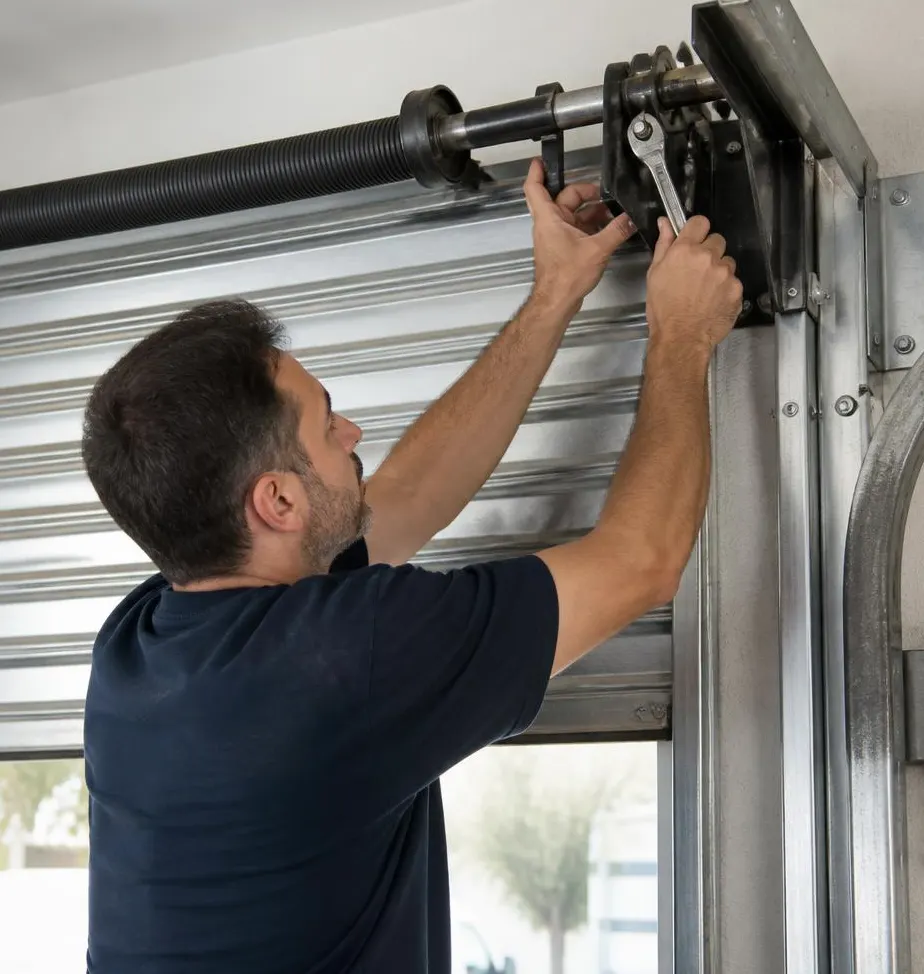
What a Technician Finds on a Typical Call
Most calls about tracks in this area start the same way: a homeowner says the door is "stuck" or "grinding" and assumes the opener is bad. On arrival, the first thing a technician does is stand back and watch the door travel a few inches by hand. Nine times out of ten in the mid-Willamette Valley, one side of the door is riding slightly ahead of the other, a roller is skipping out of the track near a bend, or there is a visible gap where the track has pulled away from the wall. The opener is usually fine. The track is the problem, and in this climate it rarely bends on its own — something caused it, and that something is almost always traceable.
Symptoms Homeowners Notice First
- The door binds or hesitates at the same spot every time it opens or closes
- A grinding, scraping, or metal-on-metal sound as the door moves
- The door looks crooked or tilted in the opening when halfway up
- One or more rollers pop out of the track, especially near a curve or seam
- A visible gap between the track and the bracket holding it to the frame
- The door reverses on its own mid-cycle (the safety sensors or opener reading the resistance from a misaligned track)
- Cables look loose or slack on one side only
Any one of these on its own might be minor. Several together usually mean the track has shifted enough to need attention before it causes damage to the opener, the cables, or the panels themselves.
Causes, Checked in the Order a Technician Looks
1. Loose Mounting Hardware in Softened Jambs
This is the first thing checked locally, and it is the most common cause by far. Garage door tracks are bolted to the wood framing of the door jamb. Months of rain and damp air each winter can soften exposed or poorly sealed wood, especially on older garages or detached outbuildings where moss and surface rot have taken hold. Once the wood softens even slightly, the lag screws holding the track bracket work loose under the daily stress of the door's weight. A loose bracket lets the track tip inward or outward a fraction of an inch, which is enough to throw off roller alignment. The fix is straightforward: remove the bracket, assess the wood underneath, and either re-anchor into solid material or install a repair plate or backing block if the jamb has degraded. The track is then re-plumbed with a level before the bracket is retightened.
2. Impact Damage
Next, a technician checks for a sharp, localized bend rather than a gradual lean, which points to something hitting the track — a car bumper, a bike, a ladder, or a stored item that got pushed against it. Impact damage usually shows up as a kink in one specific section rather than a general tilt. Minor kinks can sometimes be bent back into shape with the door removed from the track, but if the metal has stress-cracked or the kink is sharp, the damaged section gets cut out and replaced rather than reshaped, since a repaired kink is a weak point that tends to fail again under load.
3. Worn or Broken Rollers
If the track itself looks straight but the door still binds, the rollers come next. Nylon rollers wear down over years of use, and steel rollers can develop flat spots or rust, particularly where moisture collects inside the track during the wetter months. A worn roller rides unevenly and pushes outward against the track wall every cycle, gradually bowing it over time even without a single impact. The fix is simply replacing the rollers with a matched set, which also takes the ongoing stress off the track so it does not continue to spread.
4. Wind and Storm Pressure
Occasional windstorms in this part of the valley put real lateral pressure on garage doors, especially on wider two-car doors without reinforcement. A strong gust pushing against a door that is only partially supported by its tracks can flex the panels and, over repeated events, walk the track brackets loose or bend the track where it meets the horizontal run near the ceiling. A technician checks this by looking at the top sections and the horizontal track runs specifically, since that is where wind-related stress concentrates. The fix often pairs track repair with adding or upgrading reinforcement struts on the door itself to prevent a repeat.
5. Ice Buildup in a Cold Snap
Less common here than in colder regions, but it does happen during an ice storm: moisture freezes inside the track or on the bottom seal, and the door is forced to open against that resistance, either by the opener or by someone trying to free it manually. That forced movement can bend the track at the bottom curve. The fix involves clearing the ice, inspecting the bottom roller brackets closely since that is where this type of damage concentrates, and straightening or replacing the affected section.
When to Call Silverton Garage Door Works
If the door is grinding, binding, or sitting crooked in the opening, it is worth having it looked at before the rollers jump the track entirely or the opener motor takes on stress it was not built for. Silverton Garage Door Works handles track alignment and repair as part of standard Garage Door Repair calls, and will check roller condition, bracket anchoring, and overall door balance while they are there. If the misalignment has been going on for a while, it is also common to find that cables or springs have been working under uneven tension, which is where Spring Replacement sometimes comes into the same visit. Catching this before the winter storm season sets in is the easier and cheaper route.
If your garage door is sticking, grinding, or leaning to one side, call Silverton Garage Door Works to get the tracks checked and realigned before it gets worse.